Annual service visits under contract
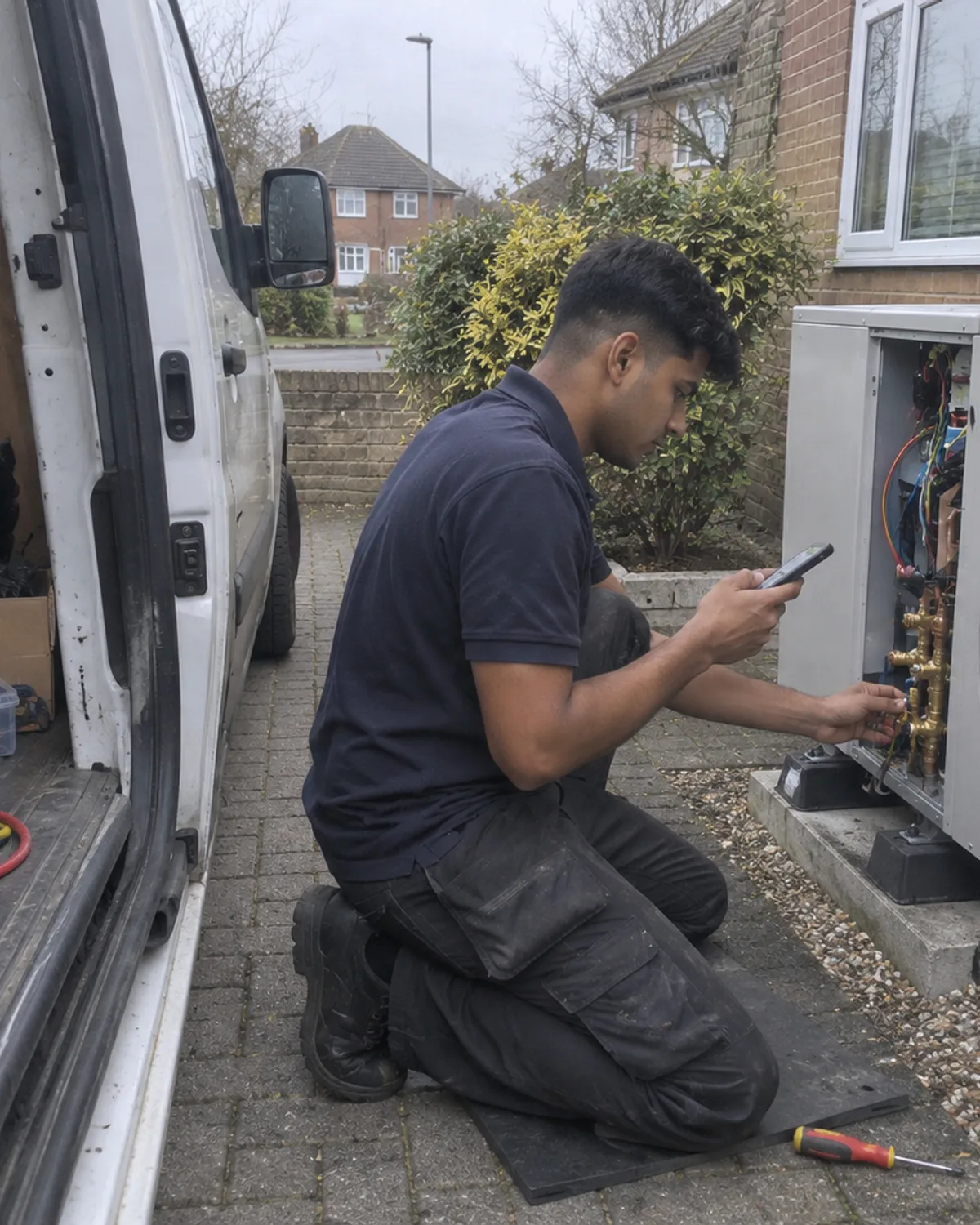
Planned visits are generated per asset, the engineer follows the checklist for that equipment, and the customer receives a signed report the same day as proof of the service.
Mobile apps· Field service and maintenance contractors
A dispatch board for the office and an offline mobile app for engineers, with checklists, photos, signatures, van stock and automatic service reports.
We build the system your engineers carry to every site: the office plans and dispatches jobs, the technician opens them on a phone or tablet, even in a basement plant room with no signal, and the signed service report reaches the customer before the van leaves. It is made to measure from a proven field service base we have already built and tested, then adapted to your job types, assets and invoicing.
Built to measure for field service and maintenance contractors, starting from a proven base we have already developed and tested.
The problem
In many maintenance and installation companies the working day still runs on phone calls, a shared spreadsheet and paper job sheets that come back to the office crumpled, late or not at all. The planner does not know who is already near the next customer, the engineer arrives without the history of the boiler, lift or fire panel he is about to open, and the parts used on site are remembered on Friday, if at all.
The cost appears at the end of the month: jobs finished but not invoiced, disputes about hours on site, missing signatures for contract visits and van stock that never matches the warehouse. Large field service suites solve part of this, but they are priced per user per month and built around a generic process that your team has to adapt to.
The solution
Every job starts on a dispatch board in the office: reactive call-outs, planned maintenance generated from contracts, installations and follow-up visits. The planner drags the job to an engineer and a time slot, and it appears in that engineer's app with the address, contact, asset, previous visits and the checklist for that type of work.
On site the app works offline. The engineer records arrival and departure, fills the checklist, takes photos, books parts from the van stock and collects the customer's signature on the screen. When the device finds a connection, everything syncs: the service report is generated as a PDF and emailed to the customer, and the job is ready to be passed to invoicing with hours and parts already filled in.
Built to measure for field service and maintenance contractors, starting from a proven base we have already developed and tested.
First release in 5-7 weeks · From €4,990 excl. VAT
Features
A daily and weekly board with one row per engineer, unassigned jobs in a side list, skills and service areas visible, and drag-and-drop to assign or move a visit.
Maintenance contracts generate the recurring visits (monthly, quarterly, annual) per asset, so the planner sees what is due and nothing depends on memory.
Open jobs and the last synced position of each engineer on a map, to place an urgent call-out with the person already in the area.
Assigned jobs, asset details, checklists and site notes are stored on the device, so work continues without signal and syncs later without losing data.
Scan a QR label on the boiler, lift or panel to open its record: model, serial number, past faults, readings and the reports of earlier visits.
Checklists per job type with readings, yes/no checks, mandatory photos and comments, defined by the office without asking a developer for every change.
Travel start, arrival and departure are recorded with one tap; the customer signs on the screen and the name of the signer is stored with the report.
Each van is a stock location; parts used on a job are deducted from it, and the replenishment list for the warehouse is built from what was actually consumed.
A branded PDF with work done, checklist results, photos, parts, hours and signature, emailed to the customer and stored on the job and on the asset.
Completed jobs move to a review list where the office checks hours and parts, then sends them to the accounting or invoicing software in one step.
In practice
A customer calls, emails or the contract schedule creates a planned visit; the office logs the job against the site and the asset.
The planner assigns the job on the board by skill, area and availability, and the engineer gets a notification in the app.
The engineer checks in, reads the asset history, completes the checklist with photos and readings, and books the parts used from the van.
The customer signs on the device; once synced, the service report PDF is sent by email and attached to the asset record.
The office reviews the job and sends it to invoicing; open issues found on site become quotes or follow-up jobs.
Integrations
Send completed jobs with hours and parts to Xero, QuickBooks, Sage or your ERP through their APIs, where your plan allows it.
Keep the van stock aligned with the central warehouse by syncing items, prices and transfers with your stock or ERP system.
Create jobs from tickets or customer records in HubSpot, a helpdesk tool or your existing CRM, so the office does not retype requests.
Addresses open in Google Maps, Apple Maps or Waze from the job, and the dispatch map uses a standard mapping provider.
Reports and arrival notices are sent through your email server or providers such as Brevo or Twilio.
Single sign-on for office staff and engineers, and optional mirroring of jobs to personal calendars.
Integrations depend on the APIs or exports your current tools provide. We verify them during analysis.
Technical sheet
Planned visits are generated per asset, the engineer follows the checklist for that equipment, and the customer receives a signed report the same day as proof of the service.
The planner sees on the map who is nearest and has the right skills, moves a planned visit and dispatches the breakdown; the engineer arrives with the full history of the unit.
External engineers get app access limited to their own jobs, and their reports arrive in the same format as those of your own team.
The project
A working session on your current process, data and tools. You receive a written scope, milestones and a fixed quote.
We adapt the proven base to your workflow and deliver a first version your team can use on real data.
Short feedback cycles with the people who use the software, with clear acceptance checks for each milestone.
Data import, training and production release, with the team that built the software on hand.
Fixes and adjustments in the first weeks, then optional ongoing support or new features as separate, scoped iterations.
Price
From €4,990 excl. VAT
First release in 5-7 weeks
Starting price excl. VAT for a first production release. The final price depends on your specifications (integrations, modules, sites, users) and is confirmed in writing before work starts.
We work to agreed milestones and acceptance checks. If we miss a committed delivery, we correct the work on our side until it meets what we agreed.
Request a quoteNo. It is software built for your company from a field service base we have already developed: jobs, assets, dispatch, offline sync and reports. We then shape job types, checklists, contract rules and the report layout around how your engineers work. You pay for the project, not a fee for every engineer you add.
A first production release with the dispatch board, the mobile app with offline mode, checklists, signatures, van stock, the service report and one invoicing integration, configured for your job types. The final price depends on the number of integrations, custom checklists and special flows such as subcontractors or multiple companies. We confirm scope and price in writing before work starts. Prices exclude VAT.
Yes. The engineer downloads the job pack when there is a connection, usually at the start of the day. Checklists, photos, parts and signatures are saved on the device and synced automatically when the signal returns. Conflicts, for example two people editing the same job, are handled by clear rules agreed during analysis.
Yes. We import customers, sites, assets with serial numbers and active maintenance contracts from spreadsheets or exports of your current software. We review duplicates and missing data with you first, because asset lists built over many years are rarely clean.
The first release includes one integration with your invoicing or accounting system, if it offers an API. Completed jobs are reviewed by the office and then sent with hours and parts. If there is no API, we prepare a structured export your accountant can import.
Yes, as configurable checklists with readings, photos and signatures, stored against each asset and visit. The software helps you keep records organised and easy to retrieve. What has to be checked and how often still depends on the rules and standards that apply to your work, which you define with us.
Usually not. The app runs on recent Android and iOS phones and tablets. For dusty or wet environments many companies choose rugged devices, but that is your choice and not required by the software.
Asset register, preventive maintenance plans, work orders, breakdown requests and spare parts for plants, facilities and maintenance contractors.
Lead intake, tablet site surveys, quotes with equipment lists, installation crews, commissioning documents and maintenance contracts for installers.
Mobile checklists for safety walks, store audits, HACCP checks, pre-use checks and property inspections, with scoring, photos and follow-up actions.
A few lines are enough. We reply within one business day with questions and a first view of scope and cost.
From €4,990 excl. VAT · First release in 5-7 weeks
Tell us how you work today and which tools you use. We reply with a concrete first release proposal, a timeline and a price.